Introduction
Hair can become dry, weak, brittle, or difficult to manage for many reasons. Frequent heat styling, bleaching, coloring, chemical straightening, tight hairstyles, and everyday friction can gradually affect the hair’s surface and internal structure.
When damage accumulates, hair may become rough, tangled, dull, and more likely to break. Choosing the right treatment can help improve its appearance, softness, manageability, and resistance to further damage.
However, not all hair treatments do the same thing. Some focus on bond-building technology, others provide deep conditioning, and some use proteins or amino acids to improve the feel and strength of damaged strands.
In this guide, the I AM LUSTRE Editorial Team explores 10 hair treatments worth considering in 2026. We explain what each product is designed to do, who may benefit from it, and what to consider before adding it to a routine.
An important distinction: Cosmetic treatments can improve the condition and appearance of the hair fiber, but they cannot biologically restore hair to its original undamaged state. The best results usually come from combining suitable treatments with gentle hair-care habits.
What Causes Hair Damage?
Understanding the source of damage can help you choose a more appropriate treatment.
Heat Styling
Frequent use of flat irons, curling irons, and blow-dryers can contribute to dryness, roughness, and structural changes in the hair fiber, particularly when high temperatures are used.
Bleaching and Coloring
Chemical coloring and bleaching can alter the hair’s protein structure and damage the cuticle. Bleached hair may become more porous, fragile, and prone to breakage.
Chemical Straightening and Relaxing
Chemical treatments that change the hair’s natural structure can affect important bonds within the hair fiber. Repeated treatments may increase fragility.
Mechanical Damage
Aggressive brushing, rough towel-drying, tight hairstyles, and friction from clothing or bedding can contribute to breakage over time.
What Should You Look for in a Hair Treatment?
Bond-Building Treatments
These products are designed to improve the strength and resilience of damaged hair by targeting aspects of its internal structure. Different brands use different technologies, so their claims should not automatically be considered equivalent.
Deep-Conditioning Treatments
These formulas commonly contain conditioning agents, fatty alcohols, oils, and other ingredients that help soften hair, improve detangling, and reduce friction.
Protein and Amino Acid Treatments
Hydrolyzed proteins and amino acids can help improve the feel and appearance of damaged hair. Some formulas are designed for occasional intensive use rather than daily application.
Leave-In Repair Treatments
Leave-in products remain on the hair after application. They may provide conditioning, smoothness, detangling, or heat protection, depending on the formula.
10 Best Hair Treatments for Damaged, Dry, and Weak Hair
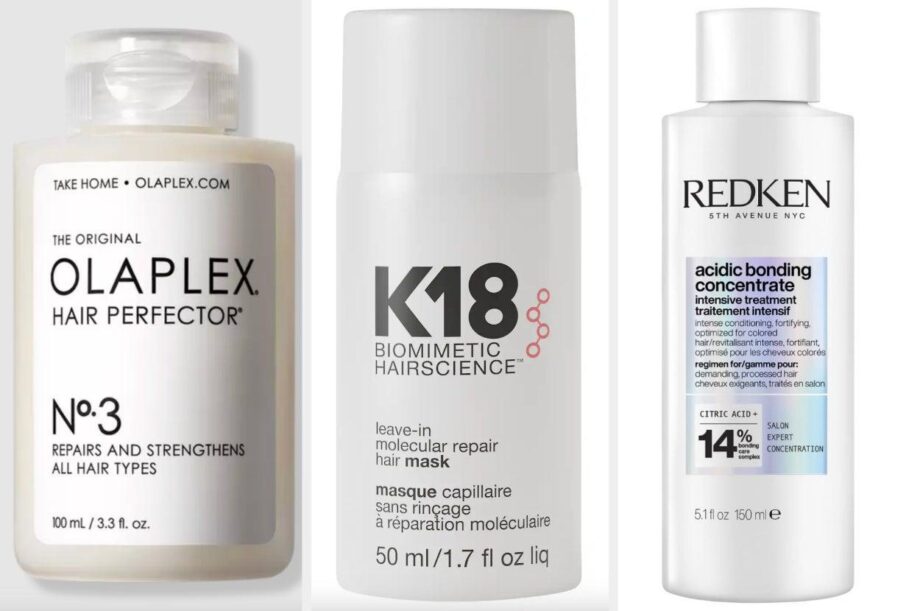
1. K18 Leave-In Molecular Repair Hair Mask — Best Overall Leave-In Repair Treatment
K18 Leave-In Molecular Repair Hair Mask is designed for hair affected by bleaching, coloring, chemical services, and heat styling.
The formula features the brand’s K18PEPTIDE technology and is designed to be used after shampooing without rinsing. Unlike a traditional rinse-out conditioner, it is intended to remain in the hair.
The manufacturer recommends shampooing without conditioner, towel-drying thoroughly, applying one to three pumps depending on hair length and density, and waiting four minutes before styling.
Why consider it:
- Leave-in treatment format.
- Designed for chemically and heat-damaged hair.
- Contains the brand’s K18PEPTIDE ingredient.
- No additional rinsing after application.
- Suitable for different hair types, according to the manufacturer.
Best suited for: People with bleached, color-treated, or chemically processed hair who prefer a leave-in treatment.
Keep in mind: Follow the four-minute application instructions. Applying more product than necessary does not guarantee better results.
Official product page: https://www.k18hair.com/collections/all/products/leave-in-molecular-repair-hair-mask-50-ml
2. OLAPLEX No.3 Hair Perfector — Best Pre-Shampoo Bond-Building Treatment
OLAPLEX No.3 Hair Perfector is a pre-shampoo treatment designed to strengthen and improve the appearance of damaged hair.
It uses the brand’s Bond Building Technology and is intended to be applied before shampooing. It is not a deep-conditioning mask or a leave-in conditioner.
The manufacturer recommends applying it to damp hair from roots to ends, leaving it for at least 10 minutes, rinsing thoroughly, and then shampooing and conditioning.
Why consider it:
- Pre-shampoo treatment format.
- Designed to strengthen damaged hair.
- Suitable for different hair types and textures.
- Can be used as part of a regular repair routine.
- Does not need to be combined with OLAPLEX No.0 to be used.
Best suited for: People who frequently color, bleach, or heat-style their hair and want a pre-wash strengthening treatment.
Keep in mind: It does not replace a moisturizing conditioner. The manufacturer specifically distinguishes No.3 from a hydrating mask.
Official product information: https://olaplex.com/pages/frequently-asked-questions-pro
3. Redken Acidic Bonding Concentrate Intensive Treatment — Best for Chemically Processed Hair
Redken Acidic Bonding Concentrate Intensive Treatment is an acidic rinse-out pre-treatment designed for damaged and chemically processed hair.
Its formula contains conditioning ingredients, glycerin, and citric acid. The treatment is intended to provide intensive conditioning and improve the feel and appearance of processed hair.
The manufacturer recommends applying it before shampooing, leaving it on for five to ten minutes, and rinsing before continuing with the Acidic Bonding Concentrate shampoo and conditioner.
Why consider it:
- Rinse-out pre-treatment.
- Designed for damaged and processed hair.
- Contains citric acid and conditioning ingredients.
- Suitable for different hair types and textures, according to the manufacturer.
- Can be incorporated into a complete hair-care system.
Best suited for: People with bleached, colored, or chemically processed hair who want an intensive pre-wash treatment.
Keep in mind: The product’s performance claims are based on the manufacturer’s stated testing conditions and system use. Results may differ when it is used alone.
Official product page: https://www.redkenpro.com/products/hair-care/acidic-bonding-concentrate-intensive-treatment-damaged-hair
4. L’Oréal Paris EverPure Bond Repair+ Pre-Shampoo Treatment — Best Affordable Bond Repair Option
L’Oréal Paris EverPure Bond Repair+ Pre-Shampoo Treatment is designed for weak, damaged, and color-treated hair.
The formula features the brand’s Bond + Amino Acid Complex and is intended to be the first step in its Bond Repair+ routine.
The manufacturer recommends applying it to damp hair before shampooing, leaving it for five to ten minutes, and rinsing thoroughly.
Why consider it:
- Pre-shampoo treatment format.
- Designed for damaged and fragile hair.
- Contains a Bond + Amino Acid Complex.
- Suitable for color-treated hair, according to the manufacturer.
- An accessible option within the bond-repair category.
Best suited for: People looking for a more budget-conscious pre-shampoo treatment for damaged hair.
Keep in mind: The manufacturer’s strongest performance claims refer to using the treatment as part of the complete Bond Repair+ system, not necessarily as a standalone product.
Official product page: https://www.lorealparisusa.com/hair-care-hair-style/hair-treatments/sulfate-free-bond-repair-pre-shampoo-treatment
5. Briogeo Don’t Despair, Repair! Deep Conditioning Mask — Best Deep Conditioning Mask
Briogeo Don’t Despair, Repair! Deep Conditioning Mask is a deep-conditioning treatment designed for dry, damaged, and brittle hair.
Unlike pre-shampoo bond treatments, this type of product focuses on conditioning and improving the feel of the hair. Deep conditioners commonly use a combination of emollients, conditioning agents, and other ingredients to reduce friction and improve manageability.
Why consider it:
- Deep-conditioning mask format.
- Designed for dry and damaged hair.
- Helps improve softness and manageability.
- Suitable for people who prefer a rinse-out treatment.
Best suited for: People with dry, rough, or brittle hair who want a richer conditioning step.
Keep in mind: Fine hair may need a smaller amount or less frequent use to avoid feeling weighed down.
Official product page: https://briogeohair.com/
6. Amika The Kure Intense Repair Mask — Best for Dry and Brittle Hair
Amika The Kure Intense Repair Mask is a rich conditioning treatment designed for damaged and brittle hair.
It is intended to help improve softness, smoothness, and manageability. This type of treatment can be particularly useful when hair feels rough after repeated coloring, heat styling, or chemical processing.
Why consider it:
- Intensive rinse-out mask.
- Designed for damaged hair.
- Helps improve softness and manageability.
- Suitable for people who prefer a traditional deep-conditioning treatment.
Best suited for: People with dry, coarse, or brittle hair who want a richer conditioning mask.
Keep in mind: It is primarily a conditioning treatment, not a substitute for every type of bond-building or protein treatment.
Official product collection: https://www.loveamika.com/
7. Living Proof Triple Bond Complex — Best Leave-In Strengthening Treatment
Living Proof Triple Bond Complex is a leave-in treatment designed to improve the strength and resilience of damaged hair.
It is intended for use after washing and before styling. Its formulation is positioned around strengthening and protecting the hair fiber rather than providing only surface-level shine.
Why consider it:
- Leave-in treatment format.
- Designed for damaged hair.
- Can be incorporated into a styling routine.
- Intended to improve hair strength and resilience.
Best suited for: People looking for a leave-in treatment to complement their regular shampoo and conditioner.
Keep in mind: Follow the current product instructions for application amount and frequency. Avoid assuming that different bond-building technologies work identically.
Official product page: https://www.livingproof.com/
8. Joico K-PAK Reconstructor — Best Protein-Based Reconstructing Treatment
Joico K-PAK Reconstructor is a treatment designed for damaged hair that needs additional conditioning and strengthening support.
Protein-based treatments use ingredients such as hydrolyzed proteins to help improve the feel and appearance of damaged hair fibers. They may be useful when hair feels weak or rough, particularly after chemical processing.
Why consider it:
- Reconstructing treatment format.
- Designed for damaged hair.
- Protein-focused approach to hair care.
- Can complement a routine for chemically treated hair.
Best suited for: People with damaged hair who want a reconstructing treatment rather than only a lightweight finishing product.
Keep in mind: Protein treatments are not automatically better when used more frequently. If hair feels stiff or unusually rough after treatment, reduce use and focus on conditioning.
Official product collection: https://www.joico.com/
9. Aphogee Two-Step Protein Treatment — Best Intensive Protein Treatment
Aphogee Two-Step Protein Treatment is a specialized protein treatment designed for severely damaged or chemically treated hair.
It is different from a regular deep-conditioning mask. The product uses a two-step process, with the protein treatment followed by a balancing moisturizer.
This is a more intensive option and requires careful attention to the manufacturer’s instructions.
Why consider it:
- Specialized two-step treatment.
- Designed for severely damaged hair.
- Protein-focused formula.
- Includes a follow-up balancing moisturizer in the system.
Best suited for: People with significantly weakened or chemically damaged hair who understand how to use intensive protein treatments.
Keep in mind: This is not an everyday conditioner. Follow the instructions carefully, especially during the drying stage. Do not manipulate or comb the hair while the treatment is hardening. If you are unsure whether your hair needs an intensive protein treatment, seek advice from a professional stylist.
Official product page: https://aphogee.com/
10. Virtue Restorative Treatment Mask — Best Luxury Repair Mask
Virtue Restorative Treatment Mask is a conditioning treatment designed for damaged, dry, and stressed hair.
The brand uses its Alpha Keratin 60ku technology in its hair-care products. The mask is intended to improve softness, smoothness, and the appearance of damaged strands.
Why consider it:
- Rich treatment-mask format.
- Designed for dry and damaged hair.
- Focuses on softness and manageability.
- Premium option for a weekly hair-care routine.
Best suited for: People looking for a luxury conditioning treatment to complement their regular hair-care routine.
Keep in mind: A premium price does not automatically mean better results for every hair type. Compare the formula and intended use with more affordable conditioning masks.
Official product collection: https://www.virtuelabs.com/
Quick Comparison: Which Hair Treatment Should You Choose?
| Product | Treatment type | Best suited for |
|---|---|---|
| K18 Leave-In Molecular Repair Mask | Leave-in molecular repair | Bleached and chemically damaged hair |
| OLAPLEX No.3 Hair Perfector | Pre-shampoo strengthening | Weak and processed hair |
| Redken Acidic Bonding Concentrate | Rinse-out pre-treatment | Color-treated and damaged hair |
| L’Oréal EverPure Bond Repair+ | Pre-shampoo treatment | Budget-conscious repair routines |
| Briogeo Don’t Despair, Repair! | Deep conditioning mask | Dry and brittle hair |
| Amika The Kure | Intensive repair mask | Dry and damaged hair |
| Living Proof Triple Bond Complex | Leave-in strengthening | Damaged hair needing added support |
| Joico K-PAK Reconstructor | Protein-based reconstruction | Chemically processed hair |
| Aphogee Two-Step Protein Treatment | Intensive protein treatment | Severely weakened hair |
| Virtue Restorative Treatment Mask | Luxury conditioning mask | Dry and stressed hair |
How to Choose the Right Treatment for Your Hair
If Your Hair Is Bleached or Chemically Treated
Consider a bond-building or strengthening treatment such as K18, OLAPLEX No.3, or Redken Acidic Bonding Concentrate.
Bleaching and chemical processing can affect the internal structure of the hair fiber, so a simple finishing oil may not address all of your concerns.
If Your Hair Is Dry and Rough
A deep-conditioning mask may be more appropriate than an intensive protein treatment.
Look for conditioning ingredients that help improve softness, detangling, and manageability.
If Your Hair Breaks Easily
Consider a routine that combines gentle cleansing, conditioning, reduced heat exposure, and a suitable strengthening treatment.
Breakage can have several causes, so changing only one product may not solve the problem.
If Your Hair Is Fine
Choose lightweight formulas and avoid applying large amounts of rich masks or leave-in products. Too much conditioning product may make fine hair look flat.
If Your Hair Is Thick or Coarse
Richer masks and intensive conditioning treatments may be more comfortable for hair that needs additional softness and manageability.
How Often Should You Use a Hair Treatment?
The right frequency depends on the formula and the condition of your hair.
- Pre-shampoo treatments: Follow the label, often once or twice weekly.
- Leave-in repair treatments: Use according to the manufacturer’s instructions.
- Deep-conditioning masks: Often used weekly or whenever additional conditioning is needed.
- Intensive protein treatments: Use only as directed, rather than automatically adding them to every wash.
More treatments do not necessarily mean healthier hair. Combining several intensive products in the same routine can make it difficult to identify what is helping or causing stiffness, buildup, or irritation.
Common Hair Treatment Mistakes to Avoid
1. Expecting Permanent Repair
Hair fibers are not living tissue. Cosmetic treatments can improve the surface, strength-related properties, and appearance of hair, but they cannot biologically regenerate a damaged strand.
2. Using Too Many Treatments at Once
Combining several bond-building, protein, and conditioning treatments may be unnecessary. Choose products based on your hair’s actual needs.
3. Confusing Protein Treatments With Moisturizing Masks
Protein-focused products and deep conditioners have different purposes. One does not automatically replace the other.
4. Ignoring Heat Protection
A repair treatment does not necessarily provide adequate heat protection. Check the product instructions and use a dedicated heat protectant when needed.
5. Applying Products Incorrectly
Some treatments must be rinsed out, while others are designed to remain in the hair. Using a pre-shampoo product as a leave-in treatment, for example, can lead to disappointing results.
Frequently Asked Questions
1. What is the best hair treatment for damaged hair?
There is no single best treatment for everyone. K18 and OLAPLEX No.3 are options designed for strengthening and repair routines, while deep-conditioning masks may be more suitable for dryness and roughness.
2. Can damaged hair be repaired completely?
No cosmetic product can biologically restore a damaged hair strand to its original state. Treatments can improve the feel, appearance, smoothness, and manageability of hair and may help reduce further breakage.
3. What is the difference between bond repair and deep conditioning?
Bond-repair products are designed to target aspects of hair-fiber structure and strength. Deep conditioners mainly improve softness, lubrication, detangling, and surface feel.
4. How often should I use a hair repair mask?
Many masks are designed for weekly use, but the correct frequency depends on the formula and the condition of your hair. Follow the manufacturer’s directions.
5. Is K18 better than OLAPLEX No.3?
They are different products with different application methods and technologies. K18 is a leave-in treatment used after shampooing, while OLAPLEX No.3 is a pre-shampoo treatment that must be rinsed out. The more suitable option depends on your routine and preferences.
6. Do protein treatments help damaged hair?
Protein-based treatments can help improve the feel and appearance of damaged hair. However, intensive protein treatments should be used according to their instructions, because more frequent use is not automatically better.
7. Can I use a hair treatment after bleaching?
Yes, many treatments are specifically designed for chemically processed or bleached hair. Follow the instructions and consider professional advice if your hair is severely weakened.
8. Should I use conditioner after a hair treatment?
It depends on the product. Some pre-shampoo treatments are followed by shampoo and conditioner, while certain leave-in treatments have different instructions. Always check the label.
9. Do hair treatments help prevent split ends?
Conditioning treatments can temporarily improve the appearance of split ends and reduce friction. They cannot permanently join split hair fibers together.
10. How long does it take to see results from a hair treatment?
Some conditioning products can make hair feel smoother after one use. Improvements in manageability and breakage may require consistent use and changes to damaging styling habits.
Final Thoughts
Choosing the best hair treatment starts with understanding what your hair needs.
If your main concern is chemical or heat damage, a strengthening or bond-building treatment may be worth considering. If your hair is mainly dry, rough, or difficult to detangle, a deep-conditioning mask may be more appropriate. For significantly weakened hair, a specialized protein treatment may be an option when used correctly.
K18 and OLAPLEX No.3 offer different approaches to repair-focused hair care, while Redken and L’Oréal Paris provide pre-shampoo options. Briogeo and Amika focus more on conditioning, and Aphogee offers a more intensive protein-based approach.
The most useful routine is not necessarily the one with the most products. It is the one that matches your hair’s condition, avoids unnecessary treatments, and reduces the habits that cause damage in the first place.
Editorial Note
This guide was prepared by the I AM LUSTRE Editorial Team to help readers understand the different types of hair treatments and how they may fit different hair-care needs.
Product descriptions are based on manufacturer information and published research where available. We do not claim that every product has been independently tested by our editorial team. Product formulas and directions may change, so readers should check the current packaging and official product information.
Have you tried any of these hair treatments? Share your experience or questions in the comments. Your feedback may help other readers understand which treatments work best for different hair needs.
Disclaimer
This article is for educational and informational purposes only. It is not a substitute for professional medical advice, diagnosis, or treatment. If you experience sudden or persistent hair loss, scalp irritation, or unusual changes in hair texture, consult a qualified dermatologist or healthcare professional.
Scientific and Product References
- Fernández-Peña, L., & Guzmán, E. (2020). Physicochemical Aspects of the Performance of Hair-Conditioning Formulations. Cosmetics, 7(2), 26. Read the research
- On Hair Care Physicochemistry: From Structure and Degradation to Novel Biobased Conditioning Agents. Polymers (2023). Read the research
- Breakspear, S., Nöcker, B., & Popescu, C. (2024). Chemical bonds and hair behaviour—A review. International Journal of Cosmetic Science. Read the review
- Reinforcing chemically treated human hair with citric acid. International Journal of Cosmetic Science. Read the research
- K18 — Leave-In Molecular Repair Hair Mask
- OLAPLEX — No.3 Hair Perfector information
- Redken — Acidic Bonding Concentrate Intensive Treatment
- L’Oréal Paris — EverPure Bond Repair+ Pre-Shampoo Treatment
- Briogeo — Official Website
- Amika — Official Website
- Living Proof — Official Website
- Joico — Official Website
- Aphogee — Official Website
- Virtue — Official Website