Meta Description: Discover the best hyaluronic acid serums for dry and dehydrated skin. Compare popular formulas, ingredients, and expert skincare tips for a smoother, hydrated-looking complexion.
Suggested URL Slug: best-hyaluronic-acid-serum
Category: Skin Care → Face → Face Serums
10 Best Hyaluronic Acid Serums for Deep Skin Hydration
Healthy-looking skin starts with proper hydration. Whether your skin feels tight after cleansing, looks dull throughout the day, or struggles with seasonal dryness, adding a hydrating serum may help improve its appearance and comfort.
One ingredient that continues to attract attention in skincare is hyaluronic acid.
Known for its ability to attract and retain water, hyaluronic acid is widely used in facial serums, moisturizers, and other cosmetic products. It is particularly popular among people looking for lightweight hydration without the heavy feel of some traditional creams.
But choosing the right serum is not always straightforward. Different products use different forms of hyaluronic acid, concentrations, and supporting ingredients. Some focus on lightweight hydration, while others combine hyaluronic acid with ceramides, vitamin B5, or additional moisturizing components.
At I am Lester, our editorial team has prepared this guide to help you understand how hyaluronic acid works, compare popular products, and select a serum that fits your skincare routine.
We have considered published dermatological research, publicly available ingredient information, and product formulations to create this educational buying guide.
What Is Hyaluronic Acid?
Hyaluronic acid (HA) is a naturally occurring molecule found in various tissues throughout the human body, including the skin.
It belongs to a group of substances called glycosaminoglycans and plays an important role in maintaining moisture within the extracellular matrix.
In skincare, hyaluronic acid is mainly used as a humectant. This means it helps attract and retain water, supporting the skin’s hydrated appearance.
When included in a topical serum, hyaluronic acid can help improve surface hydration and make the skin appear smoother and temporarily plumper.
A 2022 review published in Dermatologic Therapy examined the role of topical hyaluronic acid in skin quality and visible signs of aging. The authors discussed its moisturizing properties and the clinical evidence supporting its use in cosmetic skincare.[1]
5 Potential Benefits of Hyaluronic Acid for Skin
1. Helps Maintain Skin Hydration
One of the primary reasons hyaluronic acid is used in skincare is its water-binding ability.
Topical formulations can help improve the moisture content of the outer skin layers, making the complexion feel softer and more comfortable.
A clinical study published in 2021 evaluated a topical hyaluronic acid serum in 40 women aged 30–65. The researchers reported increased skin hydration following application, with measurable improvements maintained during the six-week study period.[2]
2. Helps Skin Look Smoother and Plumper
Dehydrated skin can make fine lines appear more noticeable.
By improving surface hydration, hyaluronic acid may temporarily create a smoother and fuller-looking appearance.
This does not mean that a topical serum permanently removes wrinkles. Its primary cosmetic benefit is supporting hydration and improving the appearance of skin texture.
3. Supports a Comfortable Skin Barrier
The skin barrier helps protect against excessive moisture loss and environmental irritants.
Hyaluronic acid is not a replacement for the lipids that form an effective skin barrier. However, it can complement barrier-supporting ingredients such as ceramides and moisturizers.
For this reason, some facial serums combine hyaluronic acid with ceramides, glycerin, or panthenol.
4. Works Well With Other Skincare Ingredients
Hyaluronic acid is generally compatible with many commonly used skincare ingredients.
It can be included in routines containing:
- Niacinamide.
- Vitamin C.
- Ceramides.
- Peptides.
- Glycerin.
- Panthenol.
Its hydrating role makes it a useful supporting ingredient in many skincare routines.
5. Suitable for Many Skin Types
Hyaluronic acid is commonly found in lightweight formulations that can suit different skin types.
People with dry skin may appreciate formulas containing additional moisturizing ingredients, while those with oily or combination skin may prefer lighter serum textures.
However, the complete formula matters. A product containing hyaluronic acid is not automatically suitable for every sensitive or reactive skin type.
How to Choose the Best Hyaluronic Acid Serum
Before purchasing a serum, consider more than the percentage of hyaluronic acid shown on the packaging.
The overall formulation, supporting ingredients, texture, and your skin’s needs are all important.
1. Understand Different Forms of Hyaluronic Acid
Hyaluronic acid appears in several forms in skincare formulations.
Common examples include:
Sodium Hyaluronate
A salt form of hyaluronic acid frequently used in cosmetic formulations.
Hydrolyzed Hyaluronic Acid
A form produced through the breakdown of larger hyaluronic acid molecules.
Sodium Hyaluronate Crosspolymer
A crosslinked form used in some cosmetic products to help create a moisturizing film.
Hydrolyzed Sodium Hyaluronate
A smaller-molecular-weight form used in certain hydrating formulas.
Different molecular weights can behave differently in cosmetic formulations. However, it is important not to assume that smaller molecules always deliver superior results.
A 2024 randomized controlled study involving 36 older adults with dry skin found that a lotion containing low-molecular-weight hyaluronic acid improved measured hydration more than the high-molecular-weight formula and vehicle after four weeks. The study did not establish that every low-molecular-weight product is superior for every person.[3]
2. Look for Supporting Ingredients
A good hydrating serum may contain additional ingredients that support moisture retention.
Glycerin: A humectant that attracts water and supports hydration.
Vitamin B5 (Panthenol): Helps support skin hydration and comfort.
Ceramides: Lipids that help maintain the skin barrier.
Squalane: An emollient that helps soften the skin.
Polyglutamic Acid: Another water-binding ingredient used in some hydrating formulations.
3. Choose the Right Texture
Different textures suit different preferences.
- Lightweight water-based serums: Often preferred by oily and combination skin.
- Gel serums: Provide hydration with a light feel.
- Gel-cream serums: Offer a richer moisturizing texture.
- Rich hydrating formulas: May be preferred by people with dry skin.
4. Check the Complete Ingredient List
Do not judge a serum based only on its front label.
Review the full ingredient list, especially if you have fragrance sensitivities or a history of irritation.
Also remember that product formulations can change. Always check the packaging you receive.
10 Best Hyaluronic Acid Serums to Consider
The following products are established skincare options worth comparing. This is an editorial buying guide, not a ranking based on independent laboratory testing or personal product trials conducted by I am Lester.
1. CeraVe Hydrating Hyaluronic Acid Serum – Best for Dry Skin
CeraVe Hydrating Hyaluronic Acid Serum combines hyaluronic acid with three essential ceramides and vitamin B5.
Its gel-cream texture makes it an option for shoppers who want hydration alongside barrier-supporting ingredients.
Why consider it:
- Contains hyaluronic acid.
- Includes three essential ceramides.
- Contains vitamin B5.
- Fragrance-free according to the manufacturer’s product information.
- Designed for normal to dry skin.
Best for: People looking for a hydrating serum with additional barrier-supporting ingredients.
What to consider: Its gel-cream texture may feel richer than a very lightweight water-based serum.
Official product information: https://www.cerave.com/skincare/facial-serums/hydrating-hyaluronic-acid-serum
2. The Ordinary Hyaluronic Acid 2% + B5 – Best Budget-Friendly Option
The Ordinary is known for ingredient-focused skincare products.
Its Hyaluronic Acid 2% + B5 serum is designed to support hydration using multiple forms of hyaluronic acid and supporting ingredients.
Why consider it:
- Features hyaluronic acid.
- Includes vitamin B5.
- Offers a simple serum format.
- Appeals to shoppers who prefer ingredient-focused products.
Best for: People looking for an accessible hyaluronic acid serum.
What to consider: Check whether you are purchasing the original or updated formulation, as ingredient lists can change.
Official website: https://theordinary.com/
3. Vichy Minéral 89 – Best Lightweight Hydration Booster
Vichy Minéral 89 is a well-known hydrating serum featuring hyaluronic acid and Vichy volcanic water.
Its lightweight gel texture makes it an option for people who prefer a fresh, non-heavy skincare feel.
Why consider it:
- Contains hyaluronic acid.
- Features Vichy volcanic water.
- Lightweight serum format.
- Designed to complement a daily skincare routine.
Best for: People who prefer lightweight hydration.
What to consider: It is primarily a hydration-focused product, so you may still need a moisturizer afterward.
Official product page: https://www.vichyusa.com/skin-care/mineral-89-hyaluronic-acid-serum-mineral89.html
4. La Roche-Posay Hyalu B5 Pure Hyaluronic Acid Serum – Best Premium Option
La Roche-Posay Hyalu B5 combines hyaluronic acid with vitamin B5 and other supporting ingredients.
It is designed for people interested in hydration and improving the appearance of skin texture.
Why consider it:
- Combines hyaluronic acid with vitamin B5.
- Offers a premium skincare positioning.
- Suitable for shoppers interested in a multi-ingredient hydrating serum.
Best for: People looking for a premium hydrating serum.
What to consider: Check the full ingredient list if you are sensitive to fragrance or other formula components.
Official website: https://www.laroche-posay.us/
5. Neutrogena Hydro Boost Hydrating Serum – Best Drugstore Option
Neutrogena Hydro Boost is part of a skincare range focused on hydration.
The serum is worth considering for shoppers looking for an accessible hydrating product from a widely available skincare brand.
Why consider it:
- Hydration-focused formulation.
- Convenient daily serum format.
- Suitable for shoppers exploring drugstore skincare.
Best for: People looking for a mainstream hydrating serum.
What to consider: Review the current ingredient list, especially if you prefer fragrance-free products.
Official website: https://www.neutrogena.com/
6. L’Oréal Paris Revitalift Derm Intensives 1.5% Pure Hyaluronic Acid Serum – Best for Fine-Line Appearance
L’Oréal Paris Revitalift Derm Intensives is formulated around hyaluronic acid and is marketed for hydration and improving the appearance of fine lines.
Why consider it:
- Features a stated 1.5% hyaluronic acid complex.
- Designed for daily skincare.
- Offers a familiar drugstore skincare option.
Best for: People interested in hydration and a smoother-looking complexion.
What to consider: Cosmetic hydration can temporarily improve the appearance of fine lines, but it does not permanently eliminate wrinkles.
Official website: https://www.lorealparisusa.com/
7. The INKEY List Hyaluronic Acid Serum – Best Simple Hydration Option
The INKEY List offers ingredient-focused skincare products, including a hyaluronic acid serum.
Why consider it:
- Designed around hydration.
- Lightweight serum format.
- Fits into a straightforward skincare routine.
Best for: People looking for a simple daily hydrating serum.
What to consider: Compare the complete formulation with other products before choosing.
Official website: https://www.theinkeylist.com/
8. COSRX Hyaluronic Acid 3 Serum – Best Korean Skincare Option
COSRX offers a range of Korean skincare products, including hyaluronic acid-focused formulations.
Its Hyaluronic Acid 3 Serum is an option for shoppers interested in Korean hydration products.
Why consider it:
- Korean skincare brand.
- Hydration-focused formulation.
- Useful option for people exploring K-beauty serums.
Best for: Shoppers interested in Korean skincare.
What to consider: Check the specific product version and full ingredient list before purchase.
Official website: https://www.cosrx.com/
9. Paula’s Choice Hyaluronic Acid Booster – Best Concentrated Hydration Booster
Paula’s Choice offers a hyaluronic acid booster designed to complement a broader skincare routine.
Why consider it:
- Designed to support hydration.
- Can be incorporated into a multi-step routine.
- Appeals to shoppers interested in targeted skincare boosters.
Best for: People who prefer adding a hydrating booster to their existing routine.
What to consider: Compare the texture and full ingredient list with other hydrating products.
Official website: https://www.paulaschoice.com/
10. SkinCeuticals Hydrating B5 – Best Premium Hydrating Serum
SkinCeuticals Hydrating B5 is a premium hydration-focused serum combining hyaluronic acid and vitamin B5.
Why consider it:
- Features hyaluronic acid and vitamin B5.
- Designed to support skin hydration.
- Premium skincare positioning.
Best for: People looking for a premium hydrating serum.
What to consider: Its price may be higher than many drugstore alternatives. Compare the formulation and cost per ounce before purchasing.
Official website: https://www.skinceuticals.com/
Hyaluronic Acid Serum Comparison Table
| Product | Key Ingredients / Formula | Best For |
|---|---|---|
| CeraVe Hydrating HA Serum | HA, 3 ceramides, B5 | Dry skin |
| The Ordinary HA 2% + B5 | HA, B5 | Budget-friendly |
| Vichy Minéral 89 | HA, volcanic water | Lightweight hydration |
| La Roche-Posay Hyalu B5 | HA, B5 | Premium hydration |
| Neutrogena Hydro Boost Serum | HA-based hydration formula | Drugstore option |
| L’Oréal Revitalift 1.5% | HA complex | Fine-line appearance |
| The INKEY List HA Serum | HA-based formula | Simple hydration |
| COSRX HA 3 Serum | HA-focused Korean formula | K-beauty |
| Paula’s Choice HA Booster | HA hydration booster | Routine enhancement |
| SkinCeuticals Hydrating B5 | HA, vitamin B5 | Premium serum |
Product formulations and availability may change. Verify current labels and retailer listings before purchasing. This comparison reflects general product positioning rather than independently measured efficacy.
How to Use Hyaluronic Acid Serum Correctly
Using hyaluronic acid is generally straightforward, but how you layer it with other products matters.
Step 1: Cleanse Your Face
Use a gentle facial cleanser to remove dirt, oil, and impurities.
Avoid harsh cleansing products that leave your skin feeling tight.
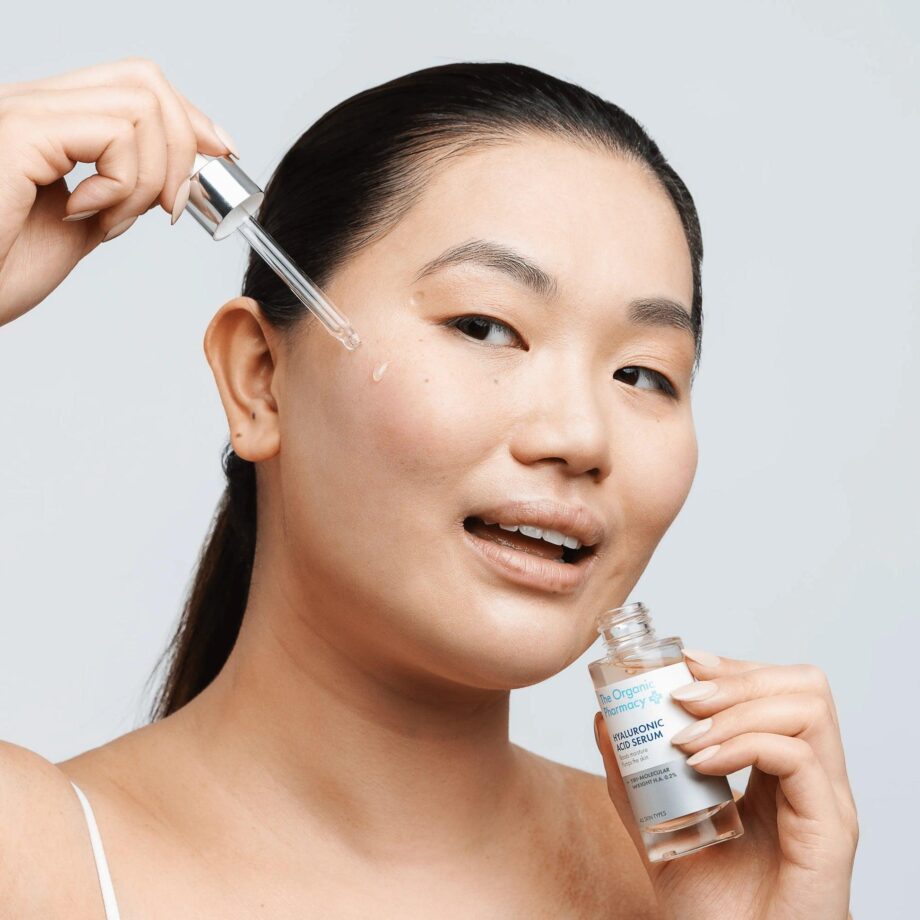
Step 2: Apply the Serum
Follow the product’s instructions and apply a suitable amount to clean skin.
Many people prefer applying hydrating serums while their skin is slightly damp.
However, the ideal application method can depend on the complete formula and the surrounding skincare routine.
Step 3: Apply Moisturizer
Follow with a moisturizer to help reduce moisture loss.
Look for ingredients such as:
- Ceramides.
- Glycerin.
- Squalane.
- Petrolatum.
- Dimethicone.
Step 4: Use Sunscreen in the Morning
Finish your daytime routine with broad-spectrum sunscreen with SPF 30 or higher.
Sunscreen is an important part of maintaining healthy-looking skin and protecting against ultraviolet damage.
Can You Use Hyaluronic Acid Every Day?
For many people, yes.
Hyaluronic acid is commonly included in products intended for daily morning and evening use.
However, follow the manufacturer’s instructions and monitor how your skin responds.
If you experience persistent redness, itching, or irritation, discontinue use and seek professional advice if needed.
Hyaluronic Acid Serum for Different Skin Types
Dry Skin
Choose a hydrating serum that combines hyaluronic acid with moisturizing ingredients such as ceramides, glycerin, or squalane.
CeraVe may be worth comparing because its formulation combines hyaluronic acid with ceramides and vitamin B5.
Oily Skin
Lightweight gel or water-based formulas may feel more comfortable.
Vichy Minéral 89 and The Ordinary are options worth comparing.
Sensitive Skin
Consider a simple, fragrance-free formulation.
Check the complete ingredient list, and introduce new products gradually.
Combination Skin
A lightweight hydrating serum may work well across different areas of the face.
You can adjust your moisturizer according to the dryness or oiliness of different areas.
Common Hyaluronic Acid Skincare Mistakes
Using Too Much Product
Applying more serum does not necessarily provide more hydration.
Follow the recommended quantity on the label.
Skipping Moisturizer
A hydrating serum is not always a replacement for moisturizer.
Depending on your skin type and environment, you may need an additional product to support moisture retention.
Combining Too Many New Products
Introducing several active skincare ingredients simultaneously makes it difficult to identify which product causes irritation.
Introduce new products gradually.
Expecting Permanent Wrinkle Removal
Hyaluronic acid can temporarily improve the appearance of fine lines through hydration.
It should not be presented as a permanent wrinkle treatment.
Frequently Asked Questions
1. What Is the Best Hyaluronic Acid Serum for Dry Skin?
CeraVe Hydrating Hyaluronic Acid Serum is worth considering because it combines hyaluronic acid with three essential ceramides and vitamin B5.
Other options include La Roche-Posay Hyalu B5 and SkinCeuticals Hydrating B5.
2. Can Hyaluronic Acid Serum Be Used Every Day?
Many hyaluronic acid serums are designed for daily use, sometimes both morning and evening. Follow the instructions for your specific product.
3. Should I Apply Hyaluronic Acid to Wet or Dry Skin?
Many skincare routines apply hyaluronic acid to slightly damp skin before moisturizer.
However, product formulations differ, and there is no universal rule that every serum must be applied in exactly the same way.
4. Can I Use Hyaluronic Acid With Vitamin C?
Yes. Hyaluronic acid and vitamin C can generally be included in the same skincare routine.
Vitamin C provides antioxidant support, while hyaluronic acid helps maintain hydration.
5. Does Hyaluronic Acid Help With Wrinkles?
It can temporarily make fine lines look less noticeable by improving skin hydration and surface plumpness.
It does not permanently remove wrinkles.
6. Is Hyaluronic Acid Good for Sensitive Skin?
It is generally well tolerated, but the entire formula matters. Fragrance and other ingredients may cause reactions in some individuals.
7. Can Hyaluronic Acid Cause Dryness?
Hyaluronic acid is primarily used as a humectant. If your skin feels dry after using a serum, consider whether you need a moisturizer or whether another ingredient in the formula is irritating your skin.
8. Can I Use Hyaluronic Acid With Retinol?
They can generally be used together. A hydrating serum may complement a routine containing retinol, although the complete routine should be introduced gradually to minimize irritation.
9. What Is the Difference Between Hyaluronic Acid and Sodium Hyaluronate?
Sodium hyaluronate is the salt form of hyaluronic acid. Both are used in skincare formulations for their water-binding properties.
10. How Long Does Hyaluronic Acid Take to Work?
Hydration can improve shortly after application. Longer-term improvements in skin appearance depend on consistent use, the formulation, and other skincare habits.
Final Verdict: Which Hyaluronic Acid Serum Should You Choose?
The best hyaluronic acid serum is the one that matches your skin’s hydration needs, preferred texture, ingredient preferences, and budget.
For dry skin, CeraVe is worth comparing because of its combination of hyaluronic acid, ceramides, and vitamin B5.
For a lightweight hydration-focused formula, Vichy Minéral 89 is another option.
If you prefer an accessible, ingredient-focused product, The Ordinary Hyaluronic Acid 2% + B5 deserves consideration.
For shoppers interested in premium skincare, La Roche-Posay and SkinCeuticals offer additional alternatives.
Remember that hydration is not achieved through one ingredient alone. A consistent routine that includes gentle cleansing, an appropriate moisturizer, and daily sun protection can help maintain healthy-looking skin.
At I am Lester, we believe the best skincare decisions are based on understanding ingredients rather than following marketing promises.
Compare the current product details and choose the formula that fits your needs.
A Note From the I am Lester Editorial Team
At I am Lester, we are passionate about making skincare knowledge accessible, practical, and evidence-informed.
Our editorial team spends time researching published studies, examining ingredient information, and comparing skincare products to help readers understand their options.
We believe that skincare should be based on realistic expectations, transparency, and informed decisions.
We do not claim to have independently laboratory-tested every product featured in our buying guides. Our recommendations are editorial comparisons based on publicly available product information and scientific literature.
We Would Love to Hear From You!
Have you tried a hyaluronic acid serum?
Which product do you prefer: CeraVe, The Ordinary, Vichy, or another brand?
Share your experience in the comments. Your feedback helps us understand what our readers need and guides the skincare topics we research next.
If you found this guide useful, share it with your friends and subscribe to the I am Lester newsletter for more skincare, haircare, and beauty guides.
I am Lester — Your guide to informed beauty and skincare choices.
Scientific References and Further Reading
[1] Göllner I, Voss W, von Hehn U, Kammerer S. (2022).
Benefits of topical hyaluronic acid for skin quality and signs of skin aging: From literature review to clinical evidence.
Dermatologic Therapy. 2022;35(12):e15903.
https://doi.org/10.1111/dth.15903
[2] Draelos ZD, Diaz I, Namkoong J, Wu J, Boyd T. (2021).
Efficacy Evaluation of a Topical Hyaluronic Acid Serum in Facial Photoaging.
Dermatology and Therapy. 2021.
https://doi.org/10.1007/s13555-021-00566-0
[3] Muhammad P, Novianto E, Setyorini M, et al. (2024).
Effectiveness of topical hyaluronic acid of different molecular weights in xerosis cutis treatment in elderly: A double-blind, randomized controlled trial.
Archives of Dermatological Research. 2024;316(6):329.
https://doi.org/10.1007/s00403-024-03003-2
[4] Multicenter Evaluation of a Topical Hyaluronic Acid Serum. (2022).
Journal of Cosmetic Dermatology. 2022;21(9):3848–3858.
https://doi.org/10.1111/jocd.15241
[5] Hyaluronic Acid in Topical Applications: The Various Forms and Biological Effects of a Hero Molecule in the Cosmetics Industry.
A scientific review discussing different forms of topical hyaluronic acid and their cosmetic applications.
https://pmc.ncbi.nlm.nih.gov/articles/PMC12731180
Affiliate Disclosure
As an Amazon Associate I earn from qualifying purchases.
Some links in this article may be affiliate links. If you purchase through these links, we may earn a commission at no additional cost to you.
Our editorial recommendations are intended to provide educational information and useful product comparisons.
Medical Disclaimer
This article is for educational and informational purposes only. It does not provide medical advice, diagnosis, or treatment. Consult a qualified dermatologist for persistent dryness, irritation, or other skin concerns.
© IamLustre – Skincare, Haircare & Beauty. All rights reserved.